In the sweltering heat of the Masvingo province, where the dust of the Bikita hills settles on the parched tongues of villagers, a new kind of gold rush has turned into a silent war. It is a war of “white gold”—lithium—and the latest casualty is the transparency of Zimbabwe’s mineral wealth. When Vice President Constantino Chiwenga stood before the nation recently, his words carried the weight of a generational curse. “Future generations will spit on our graves,” he warned, “if we keep exporting raw minerals.” It was a chilling prophecy that served as the preamble to a sudden, sweeping mandate: a total ban on the export of raw lithium and other minerals.
On the surface, the government’s narrative is one of patriotic economic development. They call it “beneficiation”—the process of ensuring that minerals are refined locally to create jobs and bolster the national treasury. However, as the dust settles at the borders where thousands of tonnes of ore now sit “stuck” in a state of legislative limbo, a more sinister picture is emerging. This is not merely a story of industrial policy; it is an investigation into a “mineral lockdown” designed to consolidate power, stifle independent players, and enrich a politically connected elite.
The Great Under-Declaration Scandal
The official catalyst for the rush to ban exports was a series of “hidden details” involving massive scandals of under-declaration and “leakages” at the highest levels of the mining sector. Minister of Mines and Mining Development, Winston Chitando, has been vocal about the “malpractices” that forced the government’s hand. The state claims that miners have been systematically undervalued their exports, effectively looting the country’s future before it can even be processed.
Yet, our investigation reveals that the “leakages” the government decries are often the very channels they have helped construct. While the ban has effectively halted the operations of small-scale miners and certain foreign companies, “special dispensations” are reportedly being granted behind closed doors. These exemptions allow a select few to continue their trade while their competitors are strangled by the new regulations.
“The government is in desperate need of investors, especially in the mining sector,” notes Vivid Gwede, an independent political analyst. “Zimbabwe also views China as an ‘all weather friend’ and no doubt the investors from the Asian giant are given preferential treatment.” This preferential treatment has created a two-tier system: one for the “lithium cartels” with the “correct” political connections, and another for the independent miners now facing financial ruin.
The Sandawana Shadow
Nowhere is this power grab more evident than at the Sandawana mine in Mberengwa. Once famous for its emeralds, Sandawana became the epicentre of a “lithium rush” in 2022, attracting over 5,000 artisanal miners. For a brief moment, the local community saw a glimmer of hope. “People can now afford to take care of their families, they are earning US dollars,” one village headman remarked at the time.
But that hope was short-lived. The Zimbabwe Miners Federation (ZMF), led by Henrietta Rushwaya—a niece of President Emmerson Mnangagwa—was granted a lease over the area. Suddenly, the artisanal miners who had discovered the wealth were sidelined. They were told they could only dig if they joined the ZMF and sold their ore through the federation. The price they received for their labour plummeted by 75%.
The situation turned even darker when Kuvimba Mining House, a firm with opaque ownership and deep ties to the ruling elite, took control of the claims. One small-scale miner recounted a harrowing scene: “Kuvimba sent a huge fleet of tipper trucks onto the mountains and loaded all the lithium ore that we had extracted and disappeared into the night.” Villagers even claimed the company “took our shovels and wheelbarrows.”
A Monopoly in the Making
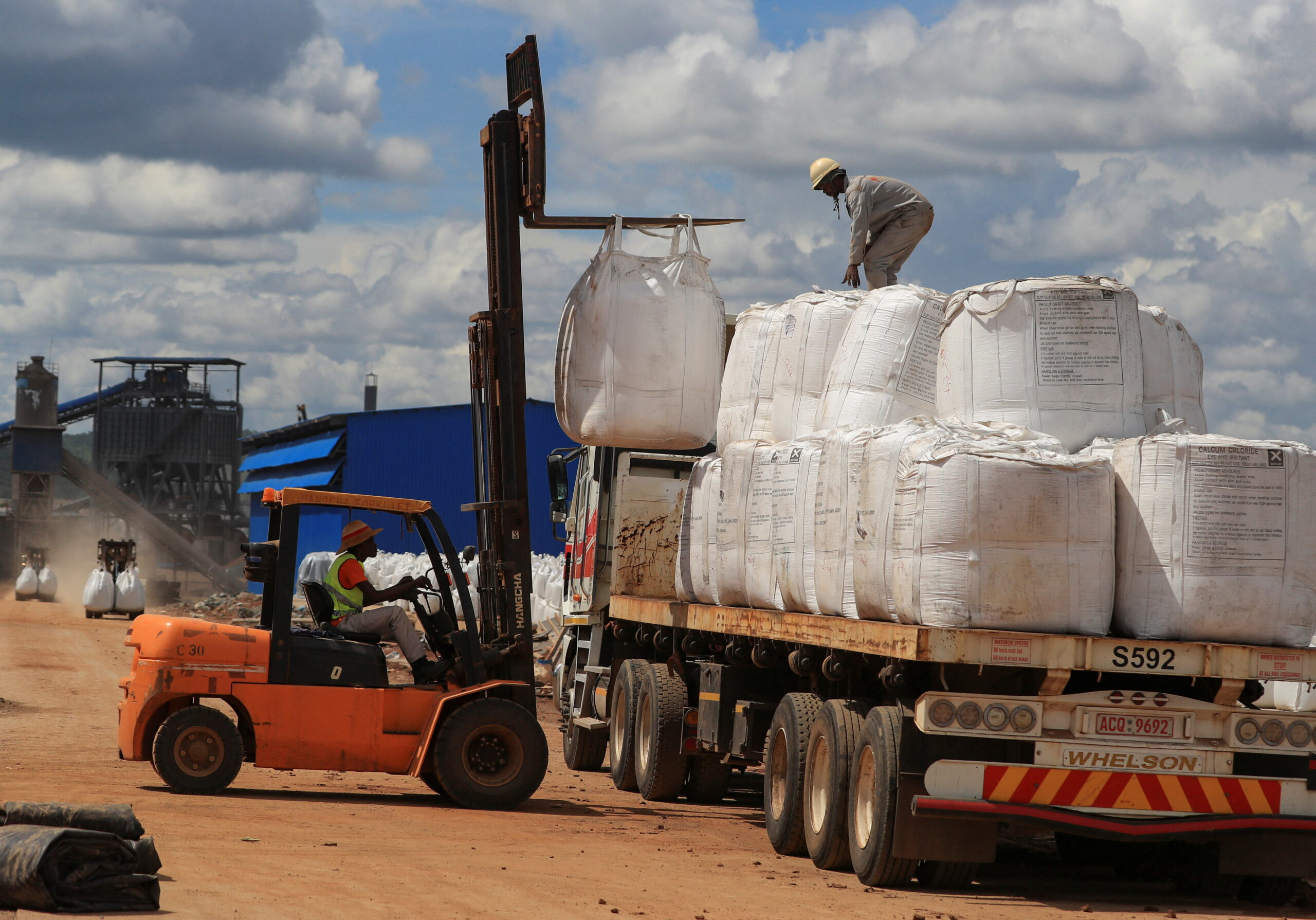
By stopping the flow of raw ore, the government has effectively created a monopoly. To export legally under the new rules, a company must possess multi-million dollar processing plants. In a country where capital is scarce and political favour is the primary currency, only those with the right connections can secure the licences and funding to build these facilities.
This “lithium lockdown” has left independent players with thousands of tonnes of ore that they can neither sell nor process. Meanwhile, companies like Sinomine Resource Group, which acquired Bikita Minerals for US$180 million in 2022, are hailed as paragons of the new policy. President Mnangagwa himself commissioned a US$300 million processing plant at Bikita, praising the company for “taking heed of my government’s call for beneficiation.”
However, the cost of this “beneficiation” is often borne by the local environment and the people who live there. Bikita Minerals was recently fined US$5,000—the maximum penalty allowed—for polluting the Matezva dam, a vital water source for hundreds of families. Emma Madakadze, secretary of the Matezva irrigation scheme, described the devastation: “We had planted potatoes and beans and did not harvest anything as the plants were rotting… Water from the dam is our lifeblood.”
Despite the fines, the mine continues to draw massive volumes of water, leaving local farmers to watch their crops wilt. “The mine is pumping out the water like never before and it is slowly getting depleted,” said local resident Alfonce Zimindi. “This is a crisis in the making.”
The “Lithium Cartels” and the Cost of Silence
The rush to ban exports is not just about saving minerals for the future; it is about who gets to sell them today. The “lithium cartels” benefiting from this ban are often shielded by the state. When the Zimbabwe National Water Authority (Zinwa) was asked for records of water abstraction at Bikita Minerals, they refused, citing “confidential client information.”
This culture of secrecy extends to the very top. Henrietta Rushwaya, the ZMF president, has been repeatedly embroiled in scandals, including a 2020 arrest for attempting to smuggle 6kg of gold out of the country. In 2023, an Al Jazeera investigation alleged she was a central figure in a multi-million dollar money laundering scheme involving gold. Her involvement in the lithium sector has raised significant “corruption red flags” for international observers, yet her influence remains undiminished.
The tragedy of Zimbabwe’s lithium looting is that the wealth of the soil rarely reaches the hands of those who walk upon it. In Mberengwa and Bikita, the communities continue to live in poverty, their water polluted and their livelihoods stolen by the very “beneficiation” promised to save them.
As the government fast-tracks its ban, the “hidden details” suggest a calculated effort to reshuffle the deck in favour of the elite. The “special dispensations” and the suddenness of the “mineral lockdown” point to a strategy of exclusion rather than development.
Vice President Chiwenga may be right that future generations will spit on the graves of those who plunder the nation’s resources. But if the current trajectory continues, they will not just be spitting on the graves of the looters; they will be mourning a future that was sold before they were even born. It is a story of a nation’s wealth being locked away, not for the many, but for the few who hold the keys to the processing plants and the ears of the powerful.
Key Details and Figures:
- Lithium Requirement: Approximately 1.9 million litres of water per metric ton of lithium processed.
- Bikita Minerals Fine: US$5,000 for water pollution (maximum penalty).
- Investment at Bikita: US$300 million for spodumene and palatine processing plants.
- Sandawana Impact: Over 5,000 artisanal miners displaced or forced into predatory contracts.
- ZMF Price Drop: 75% reduction in the price paid to artisanal miners after ZMF intervention.
PS: This article was composed following an extensive investigation into the “lithium cartels” of Zimbabwe, utilizing direct quotes from government officials, community members, and investigative reports from Global Witness and Oxpeckers.

Follow @MyZimbabweNews